|
ประเภทวัสดุ
 ทรัพยากรอิเล็กทรอนิกส์
| LDR | | 03380nmm 2200469 i 4500 |
| 001 | | on1478244398 |
| 003 | | EBZ |
| 005 | | 20260409114118.0 |
| 006 | | m d |
| 007 | | cr cnu---unuuu |
| 008 | | 241010s2025 nyu j eng d |
| 020 | __ | ‡a9780197698303‡q(PDF) |
| 020 | __ | ‡a0197698301‡q(PDF) |
| 020 | __ | ‡a0197698298‡q(ePub) |
| 020 | __ | ‡a9780197698280‡q(ebk.) |
| 020 | __ | ‡a019769828X‡q(ebk.) |
| 020 | __ | ‡a9780197698297‡q(ebk.) |
| 020 | __ | ‡a9780197698273‡q(hbk.) |
| 024 | 7_ | ‡a10.1093/9780197698303.001.0001‡2doi |
| 040 | __ | ‡aSUTL |
| 060 | 00 | ‡aWM11.1‡bK73 2025eb |
| 100 | 1_ | ‡aKramer, Robert,‡d1953- |
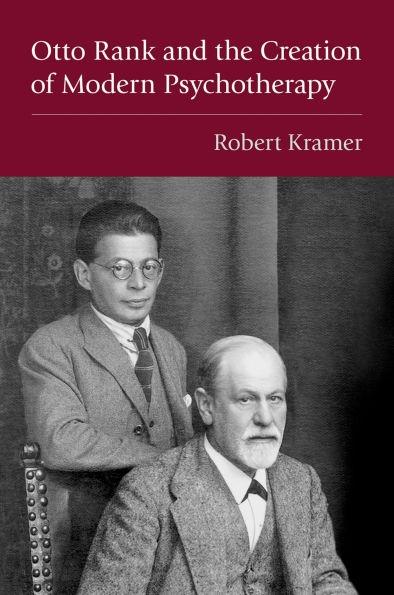
| 245 | 10 | ‡aOtto Rank and the creation of modern psychotherapy‡h[electronic resource] /‡cRobert Kramer. |
| 260 | __ | ‡aNew York, NY :‡bOxford University Press,‡c2025. |
| 300 | __ | ‡a1 online resource (xxii, 323 p.) |
| 449 | __ | ‡aE-book, 2026 |
| 504 | __ | ‡aIncludes bibliographical references and index. |
| 520 | __ | ‡a"Robert Kramer argues that Otto Rank created the principles of modern psychotherapy. Drawing on Sigmund Freud's invention of the analytic hour, Rank proposed that an authentic relationship heals emotional suffering, with self-empowerment of clients the goal. Today, the quality of the relationship is at the heart of all social work, counseling, and psychotherapy. In the late 1920s, Jessie Taft and Virginia Robinson applied Rank's ideas on relationship therapy to develop the self-leadership capacities of social workers and their clients, mostly women, creating the first strengths-based approach to social work. Unlike Freud, Rank saw women as having the creative will to lead innovation for social justice. "The 'creative will,' said Anaïs Nin, "was Rank's great contribution to the psychology of women." Rank's teachings on authenticity, respect, and empathy would have their biggest impact only after the Second World War, with the vast expansion of psychotherapy in America led by Carl Rogers, who learned relationship therapy from Rank-personally-in 1936. "I have long considered Otto Rank to be the great unacknowledged genius in Freud's circle," said Rollo May, the first American-born existential therapist. In addition, Rank's thought influenced many prominent artists and writers, including Samuel Beckett, Martha Graham, Salvador DaliÌ, Nella Larsen, Betty Friedan, Anaïs Nin, Henry Miller, Jacques Lacan, D. W. Winnicott and, most significantly, Ernest Becker, Pulitzer Prize winning author of The Denial of Death. Unpacking Rank's dense, sometimes mystical, prose, this book offers an accessible Rank for social workers, counselors, and therapists-as well as for general readers"--‡cProvided by publisher. |
| 600 | 10 | ‡aRank, Otto,‡d1884-1939. |
| 650 | _0 | ‡aPsychoanalysis‡xHistory. |
| 650 | _0 | ‡aPsychotherapy‡xHistory. |
| 650 | _0 | ‡aPsychoanalysis. |
| 650 | _0 | ‡aElectronic books. |
| 776 | 08 | ‡iPrint version:‡aKramer, Robert, 1953-‡tOtto Rank and the creation of modern psychotherapy.‡dNew York : Oxford University Press, [2025]‡z9780197698273‡w(DLC) 2024044433 |
| 776 | 08 | ‡iPrint version:‡z9780197698273 |
| 850 | __ | ‡aSUTCL |
| 856 | 4_ | ‡3EBSCOhost‡uhttps://search.ebscohost.com/login.aspx?direct=true&scope=site&db=nlebk&db=nlabk&AN=4254570‡zE-book |
| 910 | __ | ‡aPsychiatry |
|